What is Material Handling Equipment (MHE)?
In short, material handling equipment refers to the equipment used in site, warehouse or a facility to help in transporting, storing or positioning loads or material. It is very important that you make the right choice of the material handling equipment as it directly affects the operating cost and well as the operating efficiency of an enterprise.
The video below is about Material Handling System in Han-Tek,Inc.
Why is there a growing demand of MHE?
This is because of the continuous growth of sectors like ports and railroad industries and the increase in Warehousing and Supply Chain Management to support the industrial growth has provided boost to MH equipment. More importantly as most warehouses are now automated, material handling equipment is needed to manage storage, retrieval and transportation of products.
__
Sunday, January 13, 2008

5 Classification of Material Handling Equipment
 1. Transportation: Equipment used to move material from one point to another
Examples:
Conveyor
Crane


2. Positioning: Equipment used to handle material at a single location so that it is in the correct position for subsequent handling, machining, transport and storage
Examples:
Examples:
Hoist
Dock Leveler


3. Unit Load Formation: Equipment used to maintain the integrity of products during handling,
to maintain the flow of the manufacturing process (e.g. when handling single load for transport and storage)
Examples:
Containers
Crates
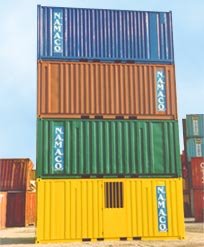

4. Storage Equipment: Equipment used to store material for an extended period of time.
Examples:
Examples:
Selective pallet rack
Stacking Frame


5. Identification And Control: Used to pull together and communicate the used information to the flow of materials within facility and between a facility and its suppliers and customers
Examples:
Bar code
Magnetic Strip


Wednesday, January 9, 2008
Identification and Control Equipment - RFID
Radio Frequency Identification ( RF TAG )


It is one of the most widely used identification system in the world right now. This is because RFID is very flexible as there are variable shapes and sizes to suit different purpose. RFID at least consist of 3 component, antenna, transceiver and a transponder. Antenna emits signal inorder to activate the transponder( RF TAG) to either write or read data on it.

Above is a simple example of how the RFID works. The antenna can be in different shapes and sizes also, they can be inserted on a door to monitor who or what is passing through the door or can even be attach to a traffic light to help in monitoring the traffic. As for the tags, as they are used for different purposes, there is no definite size for it, example are the animal tracking tags which can be as small as a pencil lead. Frequencies also affect the RFID, for lower frequency, they are mostly used for animal tracking and are of a lower cost and higher frequency is for traffice tracking whick require high speed , therefore, this is also more expensive. There are a few types of RFID available, and the most common categorization are passive and active.
Passive
This type of RFID tag do not require any power supply, meaning they operate without external source of power. However it does not mean that they really do not require power but instead, they obtain power generatedfrom the reader. These tags are much cheaper as compare to a active tag and they are lighter and have a longer lifetime. However they require a very strong powered reader inorder to transmit the power and the range of the passive tags are relatively shorter.
Passive
This type of RFID tag do not require any power supply, meaning they operate without external source of power. However it does not mean that they really do not require power but instead, they obtain power generatedfrom the reader. These tags are much cheaper as compare to a active tag and they are lighter and have a longer lifetime. However they require a very strong powered reader inorder to transmit the power and the range of the passive tags are relatively shorter.

Active
Active tag works with an internal battery and the tag data can be rewritten or modified. The capacity of the tag( in megabyte) depend on the system application requirement which normally will be 1 MB of memory. Active tag provide longer reading range and do not require strong reader, however active tags are more expensive and had a limited operational lifetime of up to 10 years depending on the type of battery.
Active tag works with an internal battery and the tag data can be rewritten or modified. The capacity of the tag( in megabyte) depend on the system application requirement which normally will be 1 MB of memory. Active tag provide longer reading range and do not require strong reader, however active tags are more expensive and had a limited operational lifetime of up to 10 years depending on the type of battery.

What is the difference between bar codes and RFID?
RFID
-Reader able to read multiple tag at the same time
-Does not need to be in line with the reader
-Able to read long range
-Will not be affected by stains on the RFID
-Radio waves reader
-Reduce human error
-Reader able to read multiple tag at the same time
-Does not need to be in line with the reader
-Able to read long range
-Will not be affected by stains on the RFID
-Radio waves reader
-Reduce human error
Bar code
-Cheap alternative
-No collision as only 1 code is being read at a time
-Optical reader
-Cut down on human error
-Adequate accessible range
We can see that RFID have some advantages over the traditional bar codes. Firstly, RFID can read multiple tag at the same time, this is to save time rather than bar code where you will need to scan the product 1 by 1. however to prevent the reader to read unwanted RFID nearby, the configuration of the system behind the reader must be properly adjusted. RFID can also read object even if they are passing through at a fast speed like those used for railroad tracking. The reading process is also better than that of bar codes. RFID does not require the product to be in line wih the reader to reads it because radio wave is being used. RFID also not affected by poor visual condition unlike bar code where a drop of water on the code may cause the bar code unable to be read. Range of the RFID is also much longer than bar codes. Both method of identification serves the main purpose, to help cut down on human errors. Though it seem RFID is much better than bar codes, in the next few years it is very unlikely to replaced bar code. This is because bar code is much cheaper compare to RFID and this is important to company trying to cut down cost.
Some uses of RFID


Identification and Control Equipment - Portable Data Terminals
Portable Data Terminals


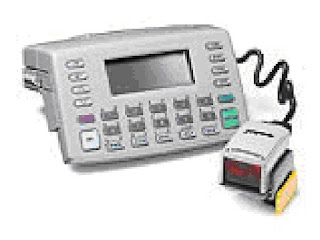


Portable data terminals are versatile, hand-held computers that can be used to scan and collect data for uploading, on a batch basis, to a host computer system. They come with optional integrated laser scanners and are available in batch or radio frequency (RF) versions.
Batch: These are designed to collect data and store it in memory until they are connected to a communication cradle and the data is uploaded to a host computer in a batch operation.
RF: RF terminals offer real-time communication. As data is entered it is immediately communicated via radio frequency to a host computer.
Batch: These are designed to collect data and store it in memory until they are connected to a communication cradle and the data is uploaded to a host computer in a batch operation.
RF: RF terminals offer real-time communication. As data is entered it is immediately communicated via radio frequency to a host computer.
Basic Terminals Configurations are:
PDA-style

These devices are like personal computers, but are designed to be carried around and operated by touching the screen with a special pen as opposed to using an external keyboard.
Handheld

These are designed to be carried by the operator, similar to holding a flashlight.
Wearable

It is worn on the index finger and activated by pointing the finger at the bar code.
Character

These devices have a text display and a keyboard for data entry.
Vehicle/Fixed-Mount

These are installed into housing, physically installed to/in forklifts, trucks, and other mobile types of machinery and are powered from the device.
Biometrics/Card Readers

It combines smart card technology and live fingerprint scanning. When the card is inserted into the terminal, the cardholder is prompted to place a finger on the integrated fingerprint scanner to determine if the live scan and the information on the card match.
Article
Below is an extract article from Product News Network,
PDA or PDT? The Best of Both with New WPA1200 from Wasp Barcode Technologies
10 December 2007
Latest technology in highly portable scanning device ideal for asset or inventory tracking
PLANO, Texas - Oct. 29, 2007 - The latest addition to Wasp Barcode Technologies' portable data terminal line up sets a new level of convenience, comfort and out-right features. The new WPA1200 portable data terminal is a compact, PDA-sized device designed to give small businesses and departments of larger businesses an easy-to-handle, lightweight yet rugged mobile device. Its integrated laser scan engine and large, vibrant screen make the WPA1200 ideal for collecting data for asset or inventory tracking applications. Available immediately, the Wasp WPA1200 sets a new standard in portable scanning capabilities.
The WPA1200 is a powerful mobile device designed with a long-lasting battery, a laser scan engine that reads all popular linear (1D) barcodes, a large and colorful thin-film transistor technology (TFT) touchscreen, 64Mb of SDRAM, rugged IP64 rating and built-in Bluetooth wireless connectivity. An available SDIO slot provides room for up to 1 Gb of added memory or to add an 802.11 b/g wireless SD card. The WPA1200 comes with either the Microsoft Windows CE 5.0 operating system or Windows Mobile 5.0 operating system.
The WPA1200 is available as a standalone device or combined with Wasp's highly acclaimed asset and inventory tracking applications. Paired with Wasp MobileAsset for asset tracking, the WPA1200 is ideal for use in government, education, healthcare or business environments to track IT assets, equipment or any company asset. With Wasp's new InventoryControl inventory tracking software, the WPA1200 provides an attractive data capture form factor in light manufacturing, smaller warehouses, stock rooms or inventory-carrying mobile vehicles such as installation trucks.
"With the WPA1200, asset tracking and inventory control are managed with a unit that feels more like a PDA," said Steve Coffman, president of Wasp Barcode Technologies. "Its form factor is smaller and more compact than most portable data terminals, which may be an added plus for end-users who prefer the ergonomic yet highly functional form of the WPA1200."
Thus this article shows us the usefulness of Portable Data Terminals. One of the main advantages is that procedures are automated to increase productivity and reduce human error.
With PDT, warehouses outfitted with wireless networks and a suite of scanning devices and printers suddenly become accessible and manageable.
One of the portable data terminals is Biometrics. Smart card is used with the cardholder because of the advantages:
· Provide the most secure and convenient storage for high value digital credentials.
· Provides the best protection against theft or impersonation.
· Can be read on any standard smart card reader.
Thus Portable Data Terminals become a very significant device in the world.
Tuesday, January 8, 2008
Unit load formation - Palletizers
Palletizers 


Robotic palletizers
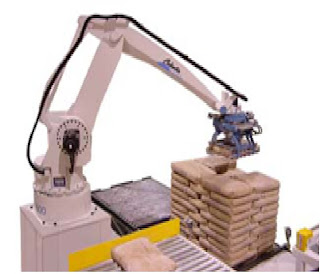

Palletizers are machines that aid in the arranging of products on pallets before beingshipped, stored or moved.

Area where the products are coming from are call feed area, these product are meant to be palletized. Feed area can be on ground level or at a higher level. For greater speed in processing the pallets, the feed( refering to the products) are normally receive in flowing fashion. Palletizers that work without feed area are normally robotic palletizers.
When looking for palletizers, it is very important to consider a lot of factors before coming to a decision to what system will be used. Factors such as types of goods handled or factory space.
There are basically three main type of palletizers, manual, robotic and the use of conventional palletizers. Manual palletizers refer to palletizing manually with labors. Manual palletizers are not advised because there may be inconsistencies. The figure below shows the possible outcome.
When looking for palletizers, it is very important to consider a lot of factors before coming to a decision to what system will be used. Factors such as types of goods handled or factory space.
There are basically three main type of palletizers, manual, robotic and the use of conventional palletizers. Manual palletizers refer to palletizing manually with labors. Manual palletizers are not advised because there may be inconsistencies. The figure below shows the possible outcome.


The other two palletizers will be furthur explained below.
Robotic palletizers

This type of palletizers are very efficient, there will be a robotic arm that automatically picks up the good and arrange it into the pallets. This palletizers can be fully automated or semi-automated where a operator will be there to control. Robotic palletizers are use mainly when the products are fragile or too heavy for labor to handles.
There are also some advantages in using this palletizers such as
● ease the workload of worker as they do not have to repeat the repetitive process of palletizing which means lower labor costs can prevent injuries to workers as they do not have to carry the heavy loads
● faster and better consistency compared to human, ' One robot typically perform 1 to 3 person work while offering 24 hours a day'
● better consistency also mean better product and process quality
● normally equip with safety functions like quickstop and smartscan
● quickstop: refering to having sensors that will shut down work cells and deflate to absorb impact thus minimizing damage to tooling and the product
● smartscan: able to detect difference between human and pallets and only if humans are detected, operations will be stopped within seconds
● flexiblility while handling products
However a disadvantages of this palletizers are because of its capacity.
There are also some advantages in using this palletizers such as
● ease the workload of worker as they do not have to repeat the repetitive process of palletizing which means lower labor costs can prevent injuries to workers as they do not have to carry the heavy loads
● faster and better consistency compared to human, ' One robot typically perform 1 to 3 person work while offering 24 hours a day'
● better consistency also mean better product and process quality
● normally equip with safety functions like quickstop and smartscan
● quickstop: refering to having sensors that will shut down work cells and deflate to absorb impact thus minimizing damage to tooling and the product
● smartscan: able to detect difference between human and pallets and only if humans are detected, operations will be stopped within seconds
● flexiblility while handling products
However a disadvantages of this palletizers are because of its capacity.
Conventional palletizers

A conventional palletizer arranges the product approaching from the speed conveyor into a given pattern onto a stripper plate and places the layer onto the pallet.
There are two types of conventional palletizers, low speed and high speed. Both types can have floor or high level feed area. The main different between them are the speed, low speed able to stack 1-10 cases per minutes while high speed able to stack 150 cases per minutes. This means that conventional palletizers are more suitable for products that have high throughput levels.However, conventional palletizers that works in line are not very flexible in the operation process. A right angled conventional palletizers are more flexible as they provide more pattern. However right angled have a limtied capacity of up to 80 cases per minutes.
Which is better?
In today's manufaturing , managers are face with great challenges such as to reduce labor cost, increase efficiency, both objectives can be achieved if the appropriate palletizers are been used. There is no better choice while choosing the palletizers, it all has to depend on many factors that will affect the managers decisions. The best method of palletizing is one that minimize the use of manufaturing plant space and fully take advantages of the palnt constraints. Some other factors are as follows:
● production throughput
● available space
● traffic patterns
● distance from palletizing area to packaging area
● type of secondary pakaging
● frequency change of sku change over in each product line
● stability of finished goods
After considering all this factors then the managers should make their decisions. A suitable system is essential to effective cost saving and higher quality products where there will be less damaged goods.
There are two types of conventional palletizers, low speed and high speed. Both types can have floor or high level feed area. The main different between them are the speed, low speed able to stack 1-10 cases per minutes while high speed able to stack 150 cases per minutes. This means that conventional palletizers are more suitable for products that have high throughput levels.However, conventional palletizers that works in line are not very flexible in the operation process. A right angled conventional palletizers are more flexible as they provide more pattern. However right angled have a limtied capacity of up to 80 cases per minutes.
Which is better?
In today's manufaturing , managers are face with great challenges such as to reduce labor cost, increase efficiency, both objectives can be achieved if the appropriate palletizers are been used. There is no better choice while choosing the palletizers, it all has to depend on many factors that will affect the managers decisions. The best method of palletizing is one that minimize the use of manufaturing plant space and fully take advantages of the palnt constraints. Some other factors are as follows:
● production throughput
● available space
● traffic patterns
● distance from palletizing area to packaging area
● type of secondary pakaging
● frequency change of sku change over in each product line
● stability of finished goods
After considering all this factors then the managers should make their decisions. A suitable system is essential to effective cost saving and higher quality products where there will be less damaged goods.
Unit Load Formation Equipment- Pallets
Pallets
A pallet is a flat transport structure designed to support a variety of goods in a stable fashion while being lifted by any mobile forklife, pallet jack, or other jacking device.
There are many types of pallets, the most commony used are Wood , Plastic and wire pallet
Plastic Pallet

· Durable pallets, light weight and easy to handle.
· Is an economical solution to material handling problems.
· Environmentally friendly pallets benefit three ways; they are recyclable, reusable trip after trip and won't rot or splinter.
· No nails, no rust, 4 way entry for fork lift handling,
· Easily steam cleaned.
· Good solution for importing and exporting products that cannot go on wood pallets due to bug infestation
Wood Pallet

· Storage of damaged wood pallets can be reduce utilization of space
· Less environmental friendly
· Require much greater management and disposal costs than wire pallet
Wire Pallet

· Low cost wire pallets are made of a durable high carbon steel
· last much longer than wood pallets
· stronger and cheaper than wood
· reduce fire hazards in warehouse or distribution center
· Higher tensile strength, greater durability / life span, offering superior moisture resistance over wood pallet
· light-weight and easy to handle
· recyclable, reusable trip after trip and won't rot or splinter
Therefore it is important for company to choose the right pallet for their usage in order to maximize utilization of space, maximize utilization of equipment, maximize protection of items and overall a lower operation costs.
Aero Pallet Bands are also used together with pallet.
- Provide outstanding pallet load stabilization
- Reusable, means lower costs
- Only 1 worker needed to apply
- Easy on, Easy off in just seconds
- No expensive equipment or tools required
- Won't tear box surfaces
- Better air movement means quicker product cooling or freezing
- Will not trap moisture

Safety tips for working around palletized loads
A pallet is a flat transport structure designed to support a variety of goods in a stable fashion while being lifted by any mobile forklife, pallet jack, or other jacking device.
There are many types of pallets, the most commony used are Wood , Plastic and wire pallet
Plastic Pallet

· Durable pallets, light weight and easy to handle.
· Is an economical solution to material handling problems.
· Environmentally friendly pallets benefit three ways; they are recyclable, reusable trip after trip and won't rot or splinter.
· No nails, no rust, 4 way entry for fork lift handling,
· Easily steam cleaned.
· Good solution for importing and exporting products that cannot go on wood pallets due to bug infestation
Wood Pallet

· Storage of damaged wood pallets can be reduce utilization of space
· Less environmental friendly
· Require much greater management and disposal costs than wire pallet
Wire Pallet

· Low cost wire pallets are made of a durable high carbon steel
· last much longer than wood pallets
· stronger and cheaper than wood
· reduce fire hazards in warehouse or distribution center
· Higher tensile strength, greater durability / life span, offering superior moisture resistance over wood pallet
· light-weight and easy to handle
· recyclable, reusable trip after trip and won't rot or splinter
Therefore it is important for company to choose the right pallet for their usage in order to maximize utilization of space, maximize utilization of equipment, maximize protection of items and overall a lower operation costs.
Aero Pallet Bands are also used together with pallet.
- Provide outstanding pallet load stabilization
- Reusable, means lower costs
- Only 1 worker needed to apply
- Easy on, Easy off in just seconds
- No expensive equipment or tools required
- Won't tear box surfaces
- Better air movement means quicker product cooling or freezing
- Will not trap moisture

Safety tips for working around palletized loads
- Develop a pallet inspection program.
- Before using a pallet, inspect it for cracks, weaknesses and other damage.
- Damaged pallet should be marked as unsafe for use until it is either fixed or thrown away.
- This can prevent a lot of potential problems.
- When loading a pallet, make sure the load is centered and not out of balance.
- Ensure the entire load is secured with shrink wrap or banding, if the pallet is holding several loose items.
- Exercise caution when stacking several pallets high.
- Make sure the stack is not leaning which may cause the whole pile to fall over.
- Always know the load limit of the pallet jack or forklift used.
- Neither the pallets nor mechanical lifting devices should ever be overloaded.
- Load limits should also establish and marked on warehouse floors.
It is important for company to manage palletized load if they are using pallet. The easier to manage pallets, the more they can focus on managing their bottom line. Smart pallet management saves money and increases revenues.
Unit Load Formation Equipment- Intermodal Containers
Intermodal Containers

Picture above shows what a container is. A container is an object that can be used to hold things. Intermodal containers are containers which can be used interchangeably in different modes of transportation such as ships, on rail, truck or by planes. Different transportation modes have different cost functions.

Intermodal container is designed to be moved with common handling equipment enabling high-speed intermodal transfers in economically large units. Examples of intermodal containers are tank and box containers.
Why used intermodal containers?
Containers are used because they significantly reduce the number of man-hours required to move and account for the items within the containers. This results in significant savings of time and money. Containers also provide significant advantages over pallets and cargo nets. These advantages include providing protection from sun, wind, and rain; can be locked and etc. They can also be stacked; therefore, the potential storage capacity or movement capacity of a ship or railcar can be saved.
Because of standardization of the intermodal containers, these enable workers from worldwide to load and unload their goods safety and effectively.
Advantages include:
- Standard transport product: transfer infrastructures allow all elements (vehicles) of a transport chain to handle it with relative ease
- Flexibility of usage: can transport a wide variety of goods ranging from raw materials (coal, wheat), manufactured goods, and cars to frozen products
-Management: Indivisible unit carries a unique identification number and a size type code enabling transport management in terms of unit. Thus, computerized management enables to reduce waiting times considerably and to know the location of containers at any time.
- Speed: Has a higher capacity of 3 to 6 times than a conventional cargo ship. Therefore, using intermodal containers gain benefit over transshipment time as a crane can handle more movements per hour.
- Costs: Container transportation reduces transport costs.
- Warehousing: Used of intermodal containers limits the risks for goods it transports because it is resistant to shocks and weather conditions.
- Security: It can only be opened at the origin, at customs and at the destination. Therefore, reduce loss and spoilage.
Used of intermodal containers do have disadvantages, they include:
- Space consumption: Conventional port areas are often not adequate for the location of container transshipment infrastructures
- Infrastructure costs: Container handling infrastructures, such as gantry cranes, yard equipment, road and rail access are needed to participate effectively in international trade.
- Stacking: Arrangement of containers is a complex problem. Have to ensure that containers that must be taken out first are not below the pile
- Management logistics: Need high levels of information technology for the handling containers.
- Empty travel: Shipping lines waste substantial amounts of time and money in repositioning empty containers
- Illicit trade: Illicit trade of drug and weapons, as well as for illegal immigrants
Below is a chart showing the used of intermodal containers over the years.

From 1990-2005, mainly because of the entry of China, containerization began to seriously impact global trade patterns and manufacturing strategies. During the same period, a new class of Post panamax containership became a dominant vector of maritime shipping. The maturation of container traffic will be linked with the maturation of the global economy.

Picture above shows what a container is. A container is an object that can be used to hold things. Intermodal containers are containers which can be used interchangeably in different modes of transportation such as ships, on rail, truck or by planes. Different transportation modes have different cost functions.

Intermodal container is designed to be moved with common handling equipment enabling high-speed intermodal transfers in economically large units. Examples of intermodal containers are tank and box containers.
Why used intermodal containers?
Containers are used because they significantly reduce the number of man-hours required to move and account for the items within the containers. This results in significant savings of time and money. Containers also provide significant advantages over pallets and cargo nets. These advantages include providing protection from sun, wind, and rain; can be locked and etc. They can also be stacked; therefore, the potential storage capacity or movement capacity of a ship or railcar can be saved.
Because of standardization of the intermodal containers, these enable workers from worldwide to load and unload their goods safety and effectively.
Advantages include:
- Standard transport product: transfer infrastructures allow all elements (vehicles) of a transport chain to handle it with relative ease
- Flexibility of usage: can transport a wide variety of goods ranging from raw materials (coal, wheat), manufactured goods, and cars to frozen products
-Management: Indivisible unit carries a unique identification number and a size type code enabling transport management in terms of unit. Thus, computerized management enables to reduce waiting times considerably and to know the location of containers at any time.
- Speed: Has a higher capacity of 3 to 6 times than a conventional cargo ship. Therefore, using intermodal containers gain benefit over transshipment time as a crane can handle more movements per hour.
- Costs: Container transportation reduces transport costs.
- Warehousing: Used of intermodal containers limits the risks for goods it transports because it is resistant to shocks and weather conditions.
- Security: It can only be opened at the origin, at customs and at the destination. Therefore, reduce loss and spoilage.
Used of intermodal containers do have disadvantages, they include:
- Space consumption: Conventional port areas are often not adequate for the location of container transshipment infrastructures
- Infrastructure costs: Container handling infrastructures, such as gantry cranes, yard equipment, road and rail access are needed to participate effectively in international trade.
- Stacking: Arrangement of containers is a complex problem. Have to ensure that containers that must be taken out first are not below the pile
- Management logistics: Need high levels of information technology for the handling containers.
- Empty travel: Shipping lines waste substantial amounts of time and money in repositioning empty containers
- Illicit trade: Illicit trade of drug and weapons, as well as for illegal immigrants
Below is a chart showing the used of intermodal containers over the years.

From 1990-2005, mainly because of the entry of China, containerization began to seriously impact global trade patterns and manufacturing strategies. During the same period, a new class of Post panamax containership became a dominant vector of maritime shipping. The maturation of container traffic will be linked with the maturation of the global economy.
Subscribe to:
Comments (Atom)